Solutions · EO Decision Engine
Identifies ways to best utilize existing and future logistics assets
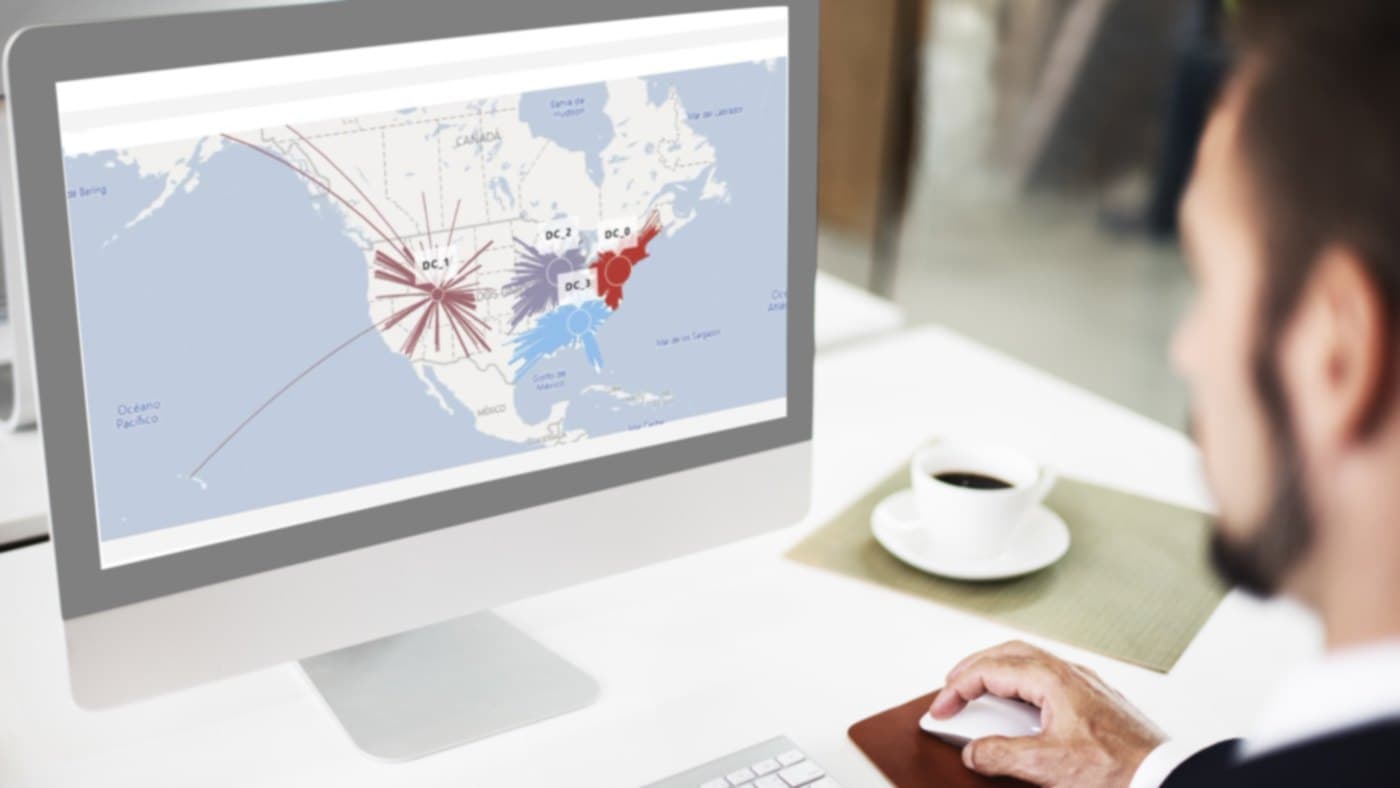
Network Design, a function of EO Decision Engine, enables our customers to move beyond traditional cost-cutting in network design by considering cross-functional impacts. This approach helps prioritize long-term resilience against demand fluctuations, process efficiencies, risk mitigation, and more.
Network design is one of the most crucial processes in driving a supply chain’s efficiency and performance.
With constantly changing supply chain dynamics, the need to reduce costs, maintain service levels, and appropriately utilize existing assets is more pressing than ever. For this reason, “what if” is a crucial phrase for every supply chain. Regarding “what ifs,” truly forward-thinking companies are thinking about their end-to-end value chain, not just their supply chain.
Primary objectives for optimizing the network design include minimizing cost while simplifying or streamlining the network footprint. But strategic Supply Chain can be enabled with trade-off analysis in extending beyond cost objectives to service, resiliency, or sustainability as objectives.
Key decisions
- Which customers are served out of which DCs
- How does product flow through the network assets (e.g., Hub/spoke, dedicated warehouses, DTC)
- Which lanes and modes of transportation
- How many DCs and where
- Inventory placement
Questions it answers
- How do we respond to unexpected disruptions?
- How robust, responsive, and flexible is my supply chain design to changes in key drivers?
- How should my supply chain react to disruptions and special events?
Where the value shows up
- Productivity & margins
- Operational costs by creating optimal production plans
- Operating costs
- Production capacity